Arsenic Risk Map
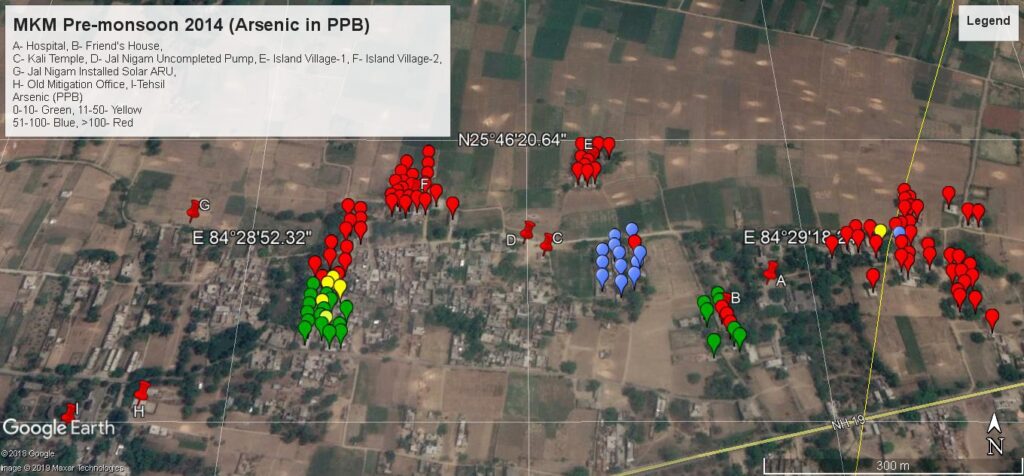
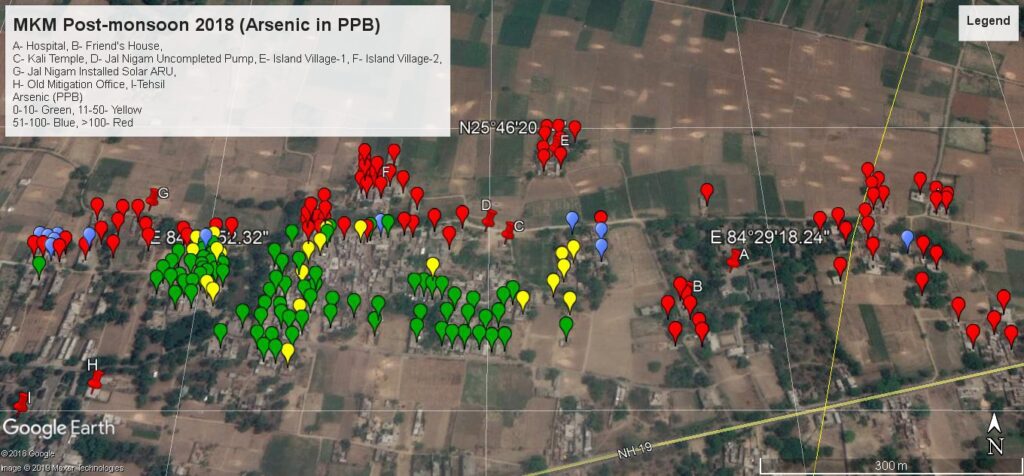
This page presents an interactive visualization of groundwater arsenic test results collected through ongoing field research by Ballia Water Center (BWC) in collaboration with academic partners, including IIT Bombay. It is designed as an open-access resource where researchers, government agencies, NGOs, and individuals can identify arsenic-prone villages and assess the level of contamination across different locations. The map enables users to explore spatial patterns of arsenic distribution, supporting evidence-based decision-making for mitigation strategies, project planning, and targeted interventions. By making this data accessible, the platform aims to support collaborative efforts toward ensuring safe and arsenic-free drinking water for affected communities.
Data Source & Disclaimer
The data presented on this map is collected through field-based groundwater testing conducted by Ballia Water Center (BWC) in collaboration with academic partners, including IIT Bombay. The results are based on standardized field test kits and sampling protocols; however, arsenic levels in groundwater may vary over time and across sources within the same location.
This map is intended for research, awareness, and preliminary planning purposes only. For regulatory, legal, or infrastructure-level decisions, users are advised to conduct confirmatory laboratory testing and consult relevant government authorities. While every effort has been made to ensure accuracy, BWC and its partners do not assume liability for decisions made solely based on this data.
Arsenic Risk Classification (Legend)
🟢 Safe (≤ 10 µg/L)
Within the guideline value recommended by the World Health Organization (WHO) for drinking water.
🟡 Moderate Risk (10–50 µg/L)
Above WHO guideline but within the permissible limit set by the Bureau of Indian Standards (IS 10500).
🔴 High Risk (> 50 µg/L)
Unsafe for drinking; immediate mitigation and alternative safe water sources are recommended.
Note for Users
Arsenic contamination can vary even between nearby handpumps or wells. Users are encouraged to verify specific water sources before consumption and use this map as a guiding tool rather than a definitive certification.