Donations

Donations

Research Data Provider

About

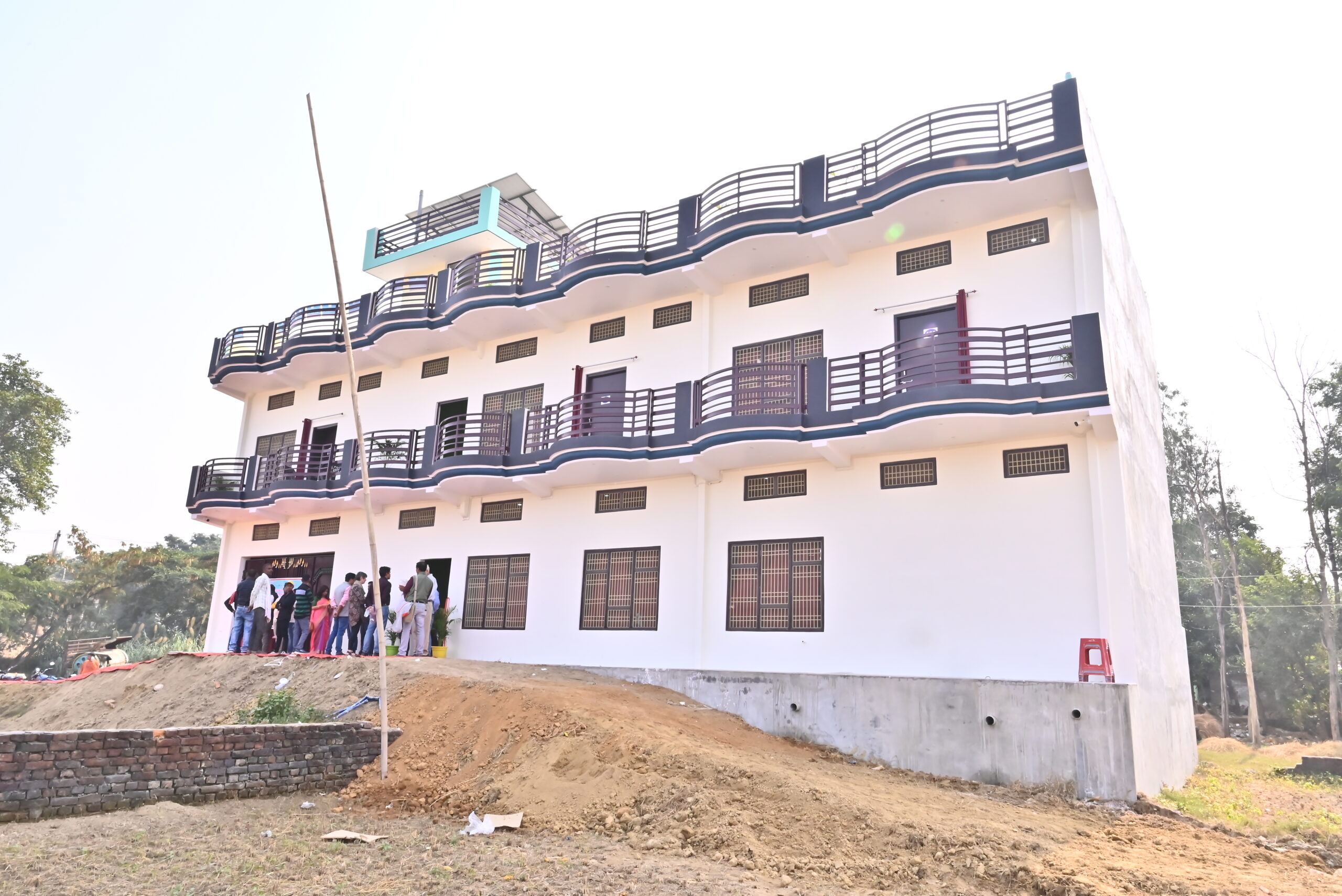
The Ballia Water Center (BWC) is an institution operated by a non-profit organization (Trust) Ballia Water Research and Social Welfare Trust, Beruarbari, Ballia, Uttar Pradesh-277304, India. All the funds will be provided by our NGO, BWRSWT for running and organizing the programs for BWC. BWRSWT is the mother body established to manage BWC funding and operations. The head office of the BWC is at Beruarbari, Ballia, Uttar Pradesh-277304, India.

The BWC will be working in villages throughout the Ballia District develop to a new, more effective model for delivering critically needed water-related services to villagers, focusing on providing access to safe drinking water and environmental protection (forestation, management of wetlands, lakes, and streams, conservation of groundwater reserves, etc.). Much of the focus will be on villages in arsenic-prone areas along the Ganga River and on the poorest and most vulnerable people, whose water-related needs are not currently being addressed.  BWC activities include promoting public awareness of water-related issues, water testing., providing, installing, and maintaining filters both domestic and community-based filters, and capacity building in support of water-related services.

The BWC will work with universities with governmental agencies to identify arsenic and other heavy metals, and other kinds of contamination in the groundwater of Ballia District on a scale of 100 meters or less and to make this information available to the public on GIS maps, accessible on the internet. It will take a few years to carry out the required well-by-well testing, but it will start very soon to post the information that is currently available but not widely disseminated.  It will also seek to identify arsenic contamination in the soil and in the food chain and to document the impacts of arsenic poisoning on human health– the victims and the specific health impacts.

Testing of water samples will be available on demand at BWC headquarters, and testing of wells in villages by BWC staff can be arranged. Test results will enable families to decide whether they need to take measures to secure safe drinking water.  For the families that need to take action, the BWC staff can inform them of their options.  The Centre will maintain an inventory of relatively inexpensive domestic (household) filters with a capacity of about 20 liters per hour that will be available for purchase. The cost of purchase will include a setup fee and a two-year maintenance contract. In some densely populated villages with widespread water contamination, community-based filters might be a more cost-effective option than domestic filters. In these instances, the BWC will inform the villagers of available options and, upon request, will assist with the purchase, installation, and maintenance. The BWC owns one community-size filter from which water may be purchased at its headquarters, and it will be experimenting with selling small quantities of water in coin-operated kiosks in a nearby village where people go shopping.

To increase the water supply infrastructure, the BWC is considering the possibility of repairing and maintaining IIT/UP Jal Nigam filters that were used previously but have been abandoned.

The BWC will undertake a variety of education and outreach activities, some at its headquarters and some arranged at sites in villages throughout the district in need of help with the mitigation of water contamination.  Presentations and workshops include efforts to raise awareness of the hazards of drinking unsafe water, mitigation options for contaminated water, and water-related local and environmental issues and how they might be addressed.

Our Mission

To develop and implement new, more effective ways of delivering critically needed water-related services to villagers of all socioeconomic classes in the Ballia District, with an emphasis on providing access to safe drinking water and environmental stewardship.

In pursuit of its mission, the BWC 

Informs families of available options for securing safe drinking water

Testing of water samples will be available on demand at BWC headquarters during business hours, and testing of wells in villages by BWC staff can be arranged. Test results will include arsenic and iron concentrations, pH, turbidity, TDS, etc. Test results will enable families to decide whether they need to take measures to secure safe drinking water.  For the families that need to take action, the BWC staff can inform them of their mitigation options. Much of the background information can be provided online, in the prevailing local language, Hindi. Workshops will be conducted in villages with extensive water contamination. 

Assists families and communities with the purchase, installation, and maintenance of filters

The Centre will maintain an inventory of relatively inexpensive domestic (household) filters with a capacity of about 20 liters per hour that will be available for purchase. The cost of purchase will include a setup fee and a two-year maintenance contract. In some densely populated villages with widespread water contamination, community-based filters might be a more cost-effective option than domestic filters. In these instances, the BWC will inform the villagers of available options and, upon request, will assist with the purchase, installation, and maintenance.  It will also explore the possibility of assisting villagers to restore and maintain IIT/UP Jal Nigam filters  that were used previously but have been abandoned.

Assists communities in planning and implementing water-related environmental restoration projects

Through its education and outreach activities, the Centre will promote conservation and environmental restoration projects such as rainwater harvesting, more limited use of irrigation water, chemical fertilizers, and pesticides, increasing the annual recharging of surface aquifers by slowing the rate of runoff, restoring ponds, protecting wetlands and lakes and streams from environmental degradation and the creation of a network of small forest reserves to provide habitat for birds wildlife. The Centre will work with local communities with an interest in environmental restoration projects in the design and implementation.

Conducts education and outreach activities

The Centre will undertake a variety of education and outreach activities, some at its headquarters and some arranged at sites in villages throughout the District in need of help with mitigation of water contamination.  Presentations and workshops will include efforts to raise awareness of the hazards of drinking unsafe water, mitigation options for contaminated water, and local water-related environmental issues and how they might be addressed.  The more generally applicable information will be available on its website both in English and in the prevalent local language, Hindi, in a poster format and BWC will also publish a magazine for disseminating important water-related information to villagers without web access.

Acquires and disseminates information on the quality of well water

The Centre will undertake a variety of education and outreach activities, some at its headquarters and some arranged at sites in villages throughout the District in need of help with mitigation of water contamination.  Presentations and workshops will include efforts to raise awareness of the hazards of drinking unsafe water, mitigation options for contaminated water, and local water-related environmental issues and how they might be addressed.  The more generally applicable information will be available on its website both in English and in the prevalent local language, Hindi, in a poster format and BWC will also publish a magazine for disseminating important water-related information to villagers without web access.

Collaborates with researchers

The Centre will collaborate with researchers with interests in water-related environmental and health issues in rural India. The Ballia District, with its dense rural population, high rate of poverty, widespread arsenic contamination in well water, and limited public health services relative to other parts of India, is an attractive field site for a wide range of research. Collaboration can take place in a variety of ways, including direct participation in fieldwork, performing water testing, looking after monitoring instrumentation installed by researchers during visits to Ballia, assembling a local staff for field programs on a short-term basis, arranging local transportation, and providing local contacts. Space permitting, the Centre’s small guest house can be used to provide living accommodations for visiting researchers.

Events

Notice

Comming soon…

Translate »